
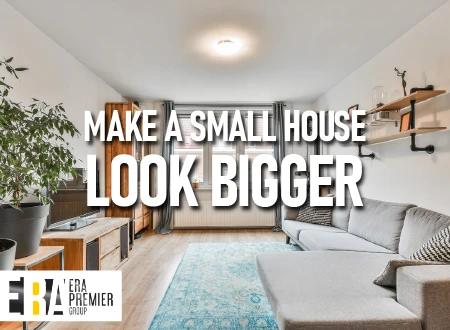
Living in a compact space doesn’t mean you have to compromise on style or comfort. Many homeowners feel trapped by limited square footage, but the secret isn’t in adding more room it’s in mastering the art of visual perception. By strategically playing with light, color, and multifunctional furniture, you can trick the eye into seeing a more expansive and airy environment. In this guide, we’ll explore expert interior design secrets that will transform your cramped apartment or tiny house into a spacious sanctuary that feels twice its actual size.
Canada’s best interior design team
💡 Harness the Power of Light Colors and Reflective Palettes
The psychological and visual impact of color is perhaps the most potent tool in a designer’s arsenal. While dark, moody hues can make a room feel cozy and intimate, they also absorb light, causing the walls to feel like they are closing in. To achieve the opposite effect, you must embrace a light and airy color palette.
Why Light Colors Work
Soft tones such as off white, crisp cream, light cerulean, or soft pebble grey have a high Light Reflectance Value (LRV). This means they bounce both natural and artificial light back into the room rather than absorbing it. This creates an optical illusion where the boundaries of the space seem to blur, making the walls feel like they are receding into the distance.
Strategic Color Application
⫸ The Monochromatic Approach: Using different shades of the same light color across your walls, furniture, and rugs creates a seamless look. Without harsh color breaks to stop the eye, the room appears continuous and expansive.
⫸ The “Ceiling Lift” Effect: Paint your ceiling a shade or two lighter than your walls or even a brilliant reflective white. This draws the eye upward, mimicking the openness of the sky and making low ceilings feel significantly higher.
⫸ The Gloss Factor: Consider using a semi gloss or satin finish for your paint. These finishes have a slight sheen that acts like a subtle mirror, further enhancing the movement of light across the surface.
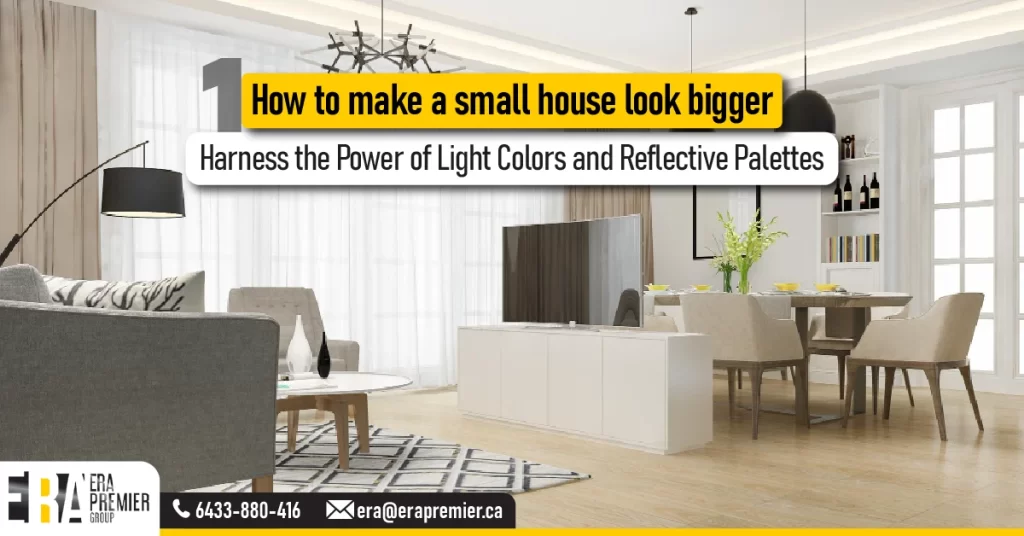
Pro Tip for Depth: To truly master this technique, paint your window frames, trim, and baseboards in a slightly lighter shade or a cooler white than the primary wall color. This subtle contrast tricks the brain into perceiving an extra layer of architectural depth, making the actual square footage feel far less restrictive.
📰To read: Top interior design trends for 2026
💡 Master Strategic Mirror Placement to Create Depth
Mirrors are often called the “magic wand” of interior design, especially when dealing with cramped quarters. They don’t just sit on a wall; they act as virtual windows, adding a sense of three dimensional depth where there was once a flat surface. By strategically positioning mirrors, you can effectively “cheat” the eye into believing the floor plan is much larger than it actually is.
The Reflection Effect | Doubling Your Space
The most effective way to use a mirror is to place it directly across from a natural light source, such as a large window or glass door. This technique does two things:
● Amplifies Natural Light: It bounces sunlight into the darkest corners of the room, eliminating shadows that make spaces feel small and “heavy.”
● Creates a “Window” Illusion: By reflecting the view from outside, the mirror acts as a second window, bringing the outdoors in and breaking the visual barrier of the wall.
Creative Ways to Use Mirrors
● Floor to Ceiling Mirrors: Leaning a large, oversized mirror against a focal wall can make the ceiling feel higher and the floor feel like it extends indefinitely. This is a favorite trick for narrow entryways and studio apartments.
● The Mirrored Backsplash: In small kitchens, installing a mirrored backsplash can transform a claustrophobic cooking area into a bright, modern space.
● Mirrored Furniture: Using pieces like mirrored coffee tables or nightstands helps furniture “disappear” into the room by reflecting the surrounding floor and rugs, reducing the visual “clutter” of bulky items.
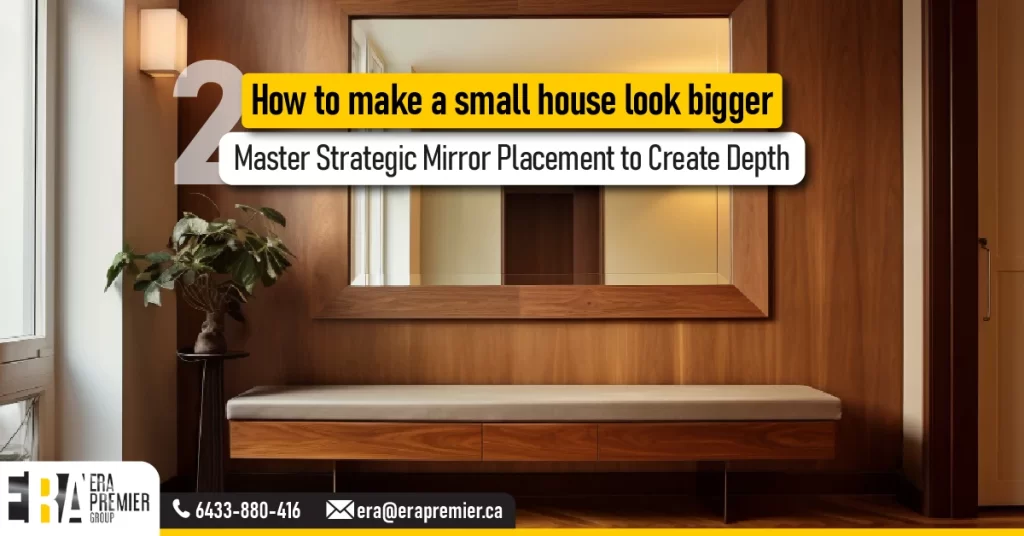
Pro Tip for Maximum Impact: If you want to add character without overwhelming a room, create a mirror gallery wall. Mix different sizes and frames on one wall. This not only opens up the hallway or living area but also serves as a sophisticated art installation that keeps the eye moving, preventing it from settling on the room’s small boundaries.
📰To read: Best Renovation Ideas for Small Spaces
💡 Invest in Multi Functional and “Leggy” Furniture
In a compact home, every square inch is prime real estate. To maximize efficiency, your furniture must “earn its keep” by serving more than one purpose. This approach often called intelligent furnishing is the cornerstone of small-space living. The goal is to reduce the number of physical items in a room while maintaining full functionality.
The Secret of “Leggy” Furniture
One of the most overlooked tricks in interior design is the “visual floor space” rule. Bulky, boxy furniture that sits directly on the ground acts as a visual roadblock, making a room feel anchored and cramped.
⫸ The Solution: Choose sofas, armchairs, and credenzas with exposed, tapered legs. When you can see the floor extending underneath the furniture, the brain perceives the room as being larger and more “airy” because the line of sight remains uninterrupted.
High Impact Multi Functional Pieces
● Storage Ottomans: Swap your traditional coffee table for a large, upholstered storage ottoman. It serves as a footrest, extra seating for guests, and a hidden sanctuary for blankets, books, or seasonal clutter.
● Transformative Tables: Look for “gateleg” or extendable dining tables. These can remain compact for daily use but expand easily when you’re hosting, ensuring your dining area isn’t permanently “eaten up” by a large table.
● Nesting Tables: These are perfect for small living rooms. They provide extra surface area when needed and tuck away into a single footprint when they aren’t.
The “Hidden Storage” Strategy
Avoid the “clutter creep” by selecting bed frames with built-in drawers or sofas with hidden compartments. By moving your storage from external bins and shelves into the furniture itself, you eliminate visual noise, which is the ultimate enemy of a spacious feel.
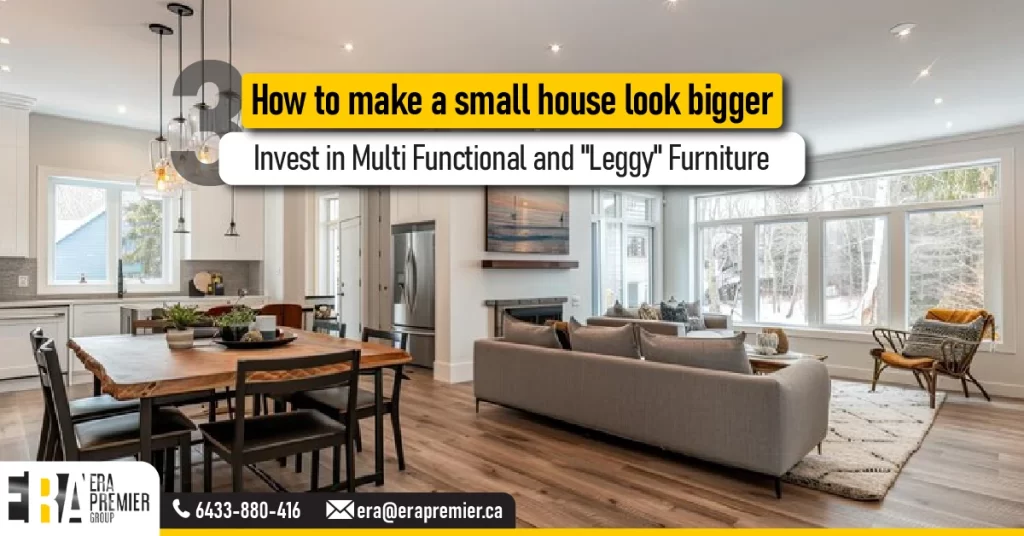
Pro Tip for Scale: Don’t be afraid to use one or two large-scale pieces instead of several small ones. A room filled with tiny furniture can feel “busy” and fragmented. One comfortable, well proportioned sectional with elegant legs often makes a small living room look more expansive and intentional than a collection of small chairs.
📰To read: Home Renovation Permits Richmond Hill
💡 Think Vertically: Unlock the Potential of Your Walls
When floor space is at a premium, the most underutilized asset in your home is the vertical plane. By shifting your design focus from the floor to the walls, you can effectively “lift” the ceiling and create a sense of grandeur. This technique, known as vertical interest, forces the eye to travel upward, preventing the room from feeling closed in or bottom-heavy.
The “High Hang” Curtain Trick
One of the most effective ways to cheat height is through window treatments. Most people hang curtains directly above the window frame, which cuts the wall in half visually.
⫸ The Strategy: Install your curtain rod just a few inches below the ceiling. By letting the fabric flow all the way to the floor, you create long, vertical lines that trick the brain into thinking the windows and the ceilings are much taller than they actually are.
Floor to Ceiling Shelving
Instead of scattered, low-level storage, invest in tall, narrow bookshelves that reach toward the ceiling.
⫸ Visual Continuity: A floor-to-ceiling unit acts as an architectural feature rather than just a piece of furniture. It draws the gaze upward and provides ample storage without eating up precious floor width.
Pro Tip: Keep the top shelves sparsely decorated or color-coordinated with your wall paint to keep the look “light” and airy.
Lighting and Art for Height
● Tall Floor Lamps: Use slender, tall floor lamps (like arc lamps or torchieres) that direct light toward the ceiling. This illuminates the upper corners of the room, eliminating shadows that can make a space feel “caved in.”
● Vertical Gallery Walls: When hanging art, arrange pieces in a vertical column rather than a horizontal row. This simple shift in orientation emphasizes the height of the room and creates a sophisticated, gallery-like feel.
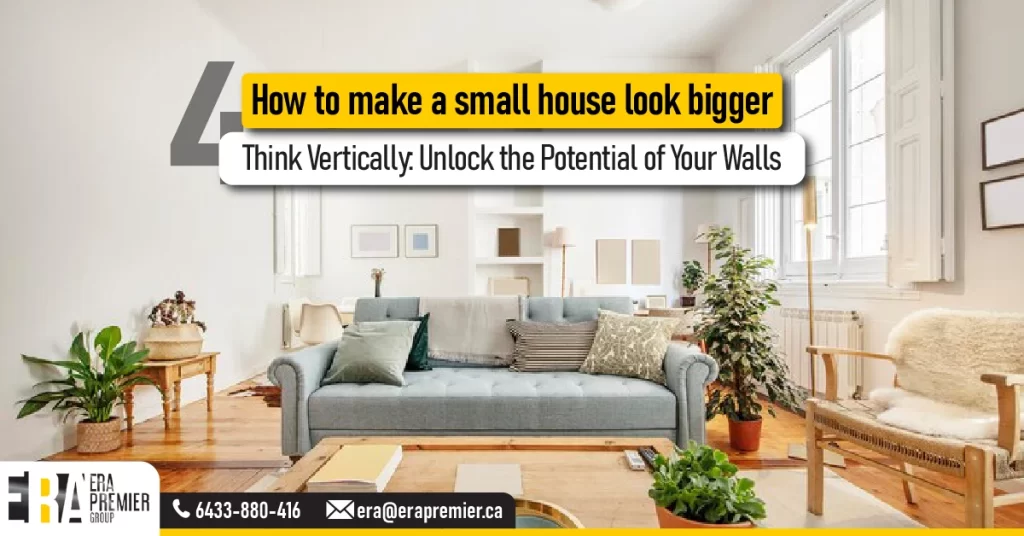
Pro Tip for Architectural Depth: Consider adding vertical shiplap or striped wallpaper. Parallel vertical lines are a powerful tool; they provide a psychological sense of “stretch,” making even the most compact studio feel like it has room to breathe.
📰To read: Innovative Home Construction Methods
💡 Maximize Natural Light and Master the Art of Decluttering
Nothing shrinks a room faster than physical and visual clutter. To truly open up a small home, you must adopt a minimalist mindset and prioritize “flow.” When a room is cluttered, the eye catches on every object, creating a “stutter” in your visual perception. By clearing the path for both your eyes and natural light, you create an uninterrupted sense of space.
The Power of Natural Light and Transparency
Light is the most effective way to blur the boundaries between the indoors and the outside world. A sun-drenched room always feels larger because light eliminates the dark corners that define a room’s limits.
● Ditch the Heavy Drapery: Replace thick, dark curtains with sheer fabrics, light linens, or sleek Roman shades. These options provide privacy without sacrificing the “flood” of natural sunlight.
● Keep Windows Clear: Avoid placing large furniture directly in front of windows. The more of the outdoors you can see, the more your brain perceives that exterior space as an extension of your living area.
● Embrace Translucent Materials: Incorporate “ghost” furniture like acrylic chairs or glass coffee tables. Because you can see right through them, they provide functionality without taking up any “visual weight.”
Strategic Decluttering | The “One In, One Out” Rule
A spacious home isn’t just about what you add; it’s about what you choose to remove. A clutter-free environment allows the architectural lines of the room to shine.
⫸ Clear Your Surfaces: Keep kitchen counters, coffee tables, and mantels as clear as possible. Choose one or two “statement” decor pieces rather than a collection of small trinkets.
⫸ The Floor Path: Ensure there is a clear walking path through every room. If you have to “zigzag” around furniture or piles of belongings, the room will instantly feel cramped.
⫸ Hidden Organization: Use decorative baskets or built-in cabinetry to hide daily essentials. If it’s not beautiful or essential, it should be tucked away out of sight.
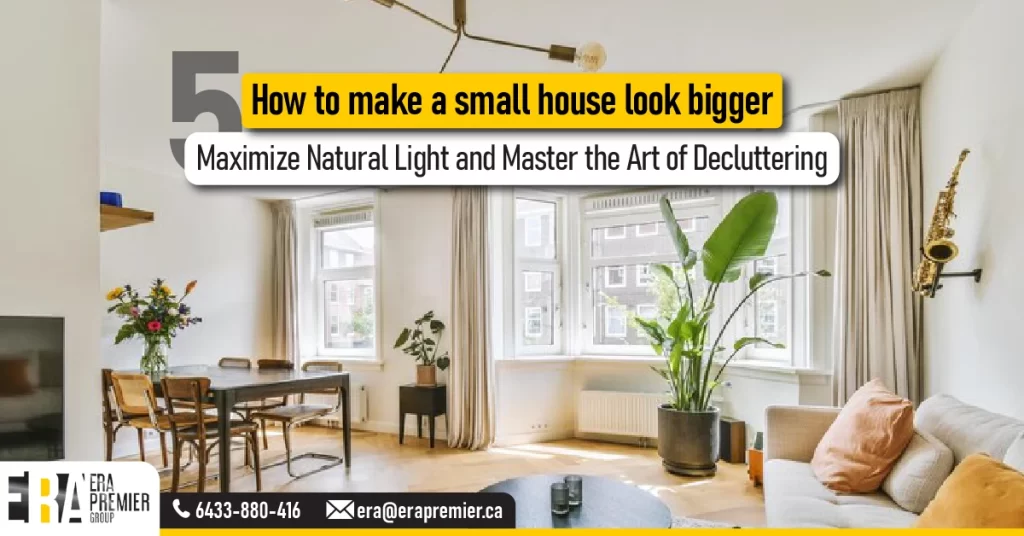
Pro Tip for a Seamless Look: To maximize the “airy” feel, match the color of your window treatments to the color of your walls. This creates a seamless transition that prevents the eye from being distracted by harsh borders, making the entire perimeter of the room feel unified and expansive.
📰To read: 5 Essential Architectural Principles
Conclusion
Transforming a compact house into a spacious, inviting sanctuary is less about the actual square footage and more about how you direct the eye. By embracing light-reflecting palettes, utilizing vertical space, and choosing multi-functional furniture, you can break down the visual barriers of any room. Remember, a spacious home is a result of intentional choices from the transparency of a glass table to the strategic placement of a mirror. Start implementing these expert tricks today, and you’ll discover that even the smallest spaces have the potential to feel grand, airy, and perfectly tailored to your lifestyle.
Frequently Asked Questions (FAQ)
1️⃣ Does painting a small room a dark color always make it look smaller?
Not necessarily. While light colors are safer for an airy feel, dark colors can create a “hidden corner” effect that blurs the boundaries of the walls, making a space feel sophisticated and deep. However, for a guaranteed “bigger” look, stick to light, cool tones.
2️⃣ What is the best type of flooring to make a house feel more expansive?
Using the same flooring material throughout different rooms creates a seamless visual flow. Hardwood or laminate planks installed diagonally or parallel to the longest wall can also trick the eye into seeing more length or width.
3️⃣ Should I use small furniture in a small room?
Actually, no. A common mistake is filling a small room with many tiny pieces, which makes it look cluttered. It is better to have one or two larger, well-scaled pieces (like a full-sized sofa) to give the room a sense of purpose and grandness.
4️⃣ How can I use rugs to increase the perceived size of a room?
A rug that is too small makes the room feel fragmented. To make a space feel larger, choose a rug that is big enough for all the furniture legs to sit on, or at least the front legs. This anchors the room and extends the visual perimeter.
5️⃣ Are open shelves better than closed cabinets for small spaces?
Open shelves can make a wall feel less “solid” and more open, but they require strict organization. If you tend to have a lot of items, closed cabinets with a high-gloss finish are better to hide clutter and reflect light, keeping the space looking tidy.