
Building a home in Toronto has never been more exciting or more expensive. With rising material costs, higher labor rates, and stricter building regulations, understanding the true cost of home construction in 2025 is essential before breaking ground. Whether you’re planning a modest family home or a luxurious custom build, knowing what drives prices in the Greater Toronto Area (GTA) can help you plan your budget wisely and avoid costly surprises. In this guide, we’ll break down average construction costs per square foot, explore the main factors that influence your expenses, and share expert insights from ERA Premier Group one of Toronto’s leading luxury home builders.
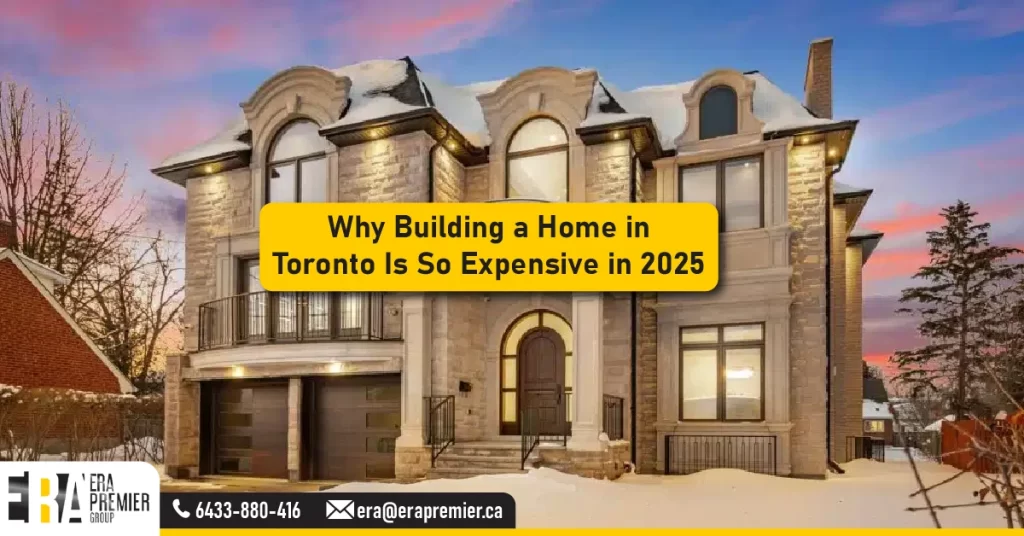
Why Building a Home in Toronto Is So Expensive in 2025
Toronto remains one of the most dynamic and high-demand housing markets in Canada and in 2025, construction costs continue to rise. Factors such as limited land availability, growing demand for custom-built homes, and the ongoing increase in material and labor prices have all contributed to higher overall expenses. Despite these challenges, many homeowners still choose to build their own houses because it gives them full control over design, quality, and location. Understanding the real cost of building a home in Toronto not only helps you set a realistic budget but also ensures that your investment delivers long-term value and comfort.
The Best Construction Company in Canada
Average Cost to Build a House in Toronto (Per Square Foot)
The cost of building a home in Toronto can vary significantly depending on the style, materials, and location within the Greater Toronto Area (GTA). As of 2025, here’s what homeowners can expect to pay on average:
- Standard-quality construction: CAD $300–$350 per square foot
- Mid-range or semi-custom homes: CAD $400–$500 per square foot
- Luxury or fully custom builds: CAD $550–$800+ per square foot, especially when using premium materials and finishes
In practical terms, constructing a 2,500 sq. ft. custom home in Toronto can cost anywhere from $1.2 million to over $2 million, not including the price of land.
Compared to 2023, construction costs have risen by approximately 10–15%, largely driven by inflation, material price hikes, and ongoing labor shortages across the industry.
To read more: the home construction process
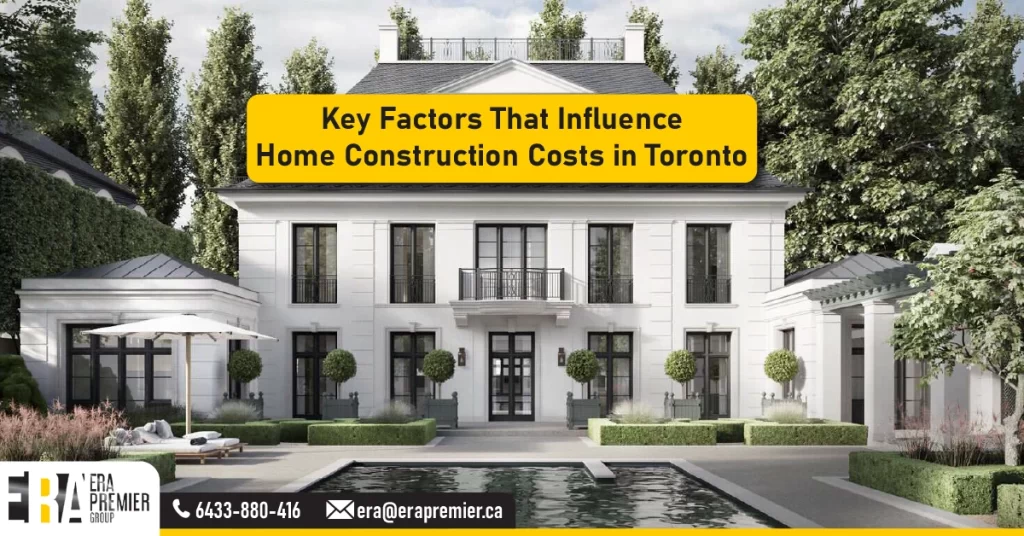
Key Factors That Influence Home Construction Costs in Toronto
Building a home in Toronto is an exciting yet complex process and understanding what drives the overall cost is essential for setting a realistic budget. While every project is unique, several key factors consistently play a major role in determining the final construction cost.
🟡 Size and Layout
The size and overall layout of your home have a direct impact on construction expenses. Larger homes require more materials, longer build times, and higher labor costs. Additionally, complex designs such as open-concept layouts, multiple stories, or custom floor plans add both engineering and finishing costs. A simple two-story house will almost always be more affordable than a sprawling custom residence with unique features and extensions.
🟡 Design Complexity and Architectural Style
Architectural design plays a huge role in pricing. A minimalist, box-shaped home tends to be more cost-effective than a house featuring intricate shapes, curved walls, vaulted ceilings, or detailed exterior facades. Custom architectural elements, such as large windows or unique rooflines, not only elevate the aesthetic appeal but also increase structural requirements, which leads to higher expenses.
🟡 Quality of Materials and Finishes
Material selection has one of the most significant effects on the final price tag. Flooring, cabinetry, countertops, fixtures, and exterior cladding all come in a wide range of quality levels. Choosing luxury materials like imported marble, natural stone, or designer lighting can dramatically increase costs. However, these upgrades also add value, durability, and long-term appeal to your property.
🟡 Labor and Contractor Rates
Skilled labor is one of the most expensive components of home construction in Toronto. The city’s demand for experienced tradespeople continues to grow, driving up hourly rates. Hiring a reputable builder or construction company may come at a higher upfront cost, but it often results in superior craftsmanship, better project management, and fewer costly mistakes in the long run.
🟡 Location Within the GTA
Your chosen location within the Greater Toronto Area (GTA) can greatly influence building costs. Constructing a home in downtown Toronto usually comes with higher expenses due to zoning restrictions, limited access for heavy equipment, and elevated permit fees. Meanwhile, suburban areas such as Vaughan, Richmond Hill, or Oakville may offer more affordable land prices and slightly lower construction rates per square foot.
The Best Real Estate Consulting in Canada
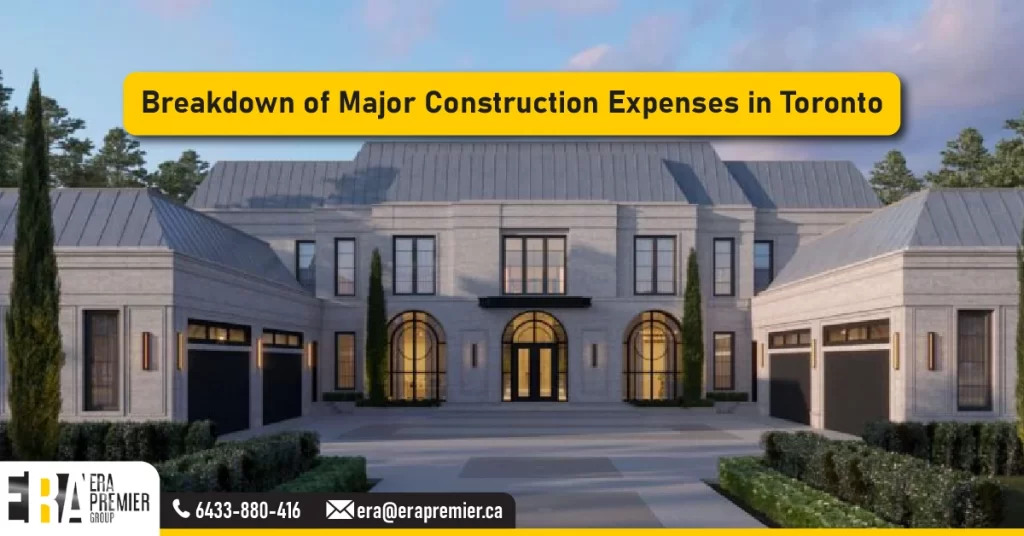
Breakdown of Major Construction Expenses in Toronto
Understanding how construction costs are distributed is key to managing your budget and avoiding unexpected expenses. While every home is unique, most new construction projects follow a general pattern in terms of how funds are allocated. Here’s a detailed breakdown of the major expense categories:
1️⃣ Site Preparation & Excavation (5–10%)
Before construction begins, the building site must be prepared. This includes clearing land, grading, excavation for foundations, and sometimes soil testing. Proper site preparation is crucial, as issues at this stage such as unstable soil or hidden underground obstacles can lead to costly delays if not addressed early.
2️⃣ Foundation & Framing (15–20%)
The foundation and structural framing are the backbone of any home. Costs here cover concrete, steel reinforcements, timber framing, and labor for construction. A strong, well-built foundation ensures long-term stability and safety, making this phase one of the most important in determining your home’s longevity and value.
3️⃣ Mechanical Systems: Electrical, Plumbing & HVAC (15–20%)
Mechanical systems include all essential installations, such as electrical wiring, plumbing, heating, ventilation, and air conditioning (HVAC). While these systems are often “behind the walls,” they account for a significant portion of your budget. Investing in high-quality, energy-efficient systems not only ensures comfort but also reduces long-term utility costs.
4️⃣ Interior Finishes (25–30%)
Interior finishes typically consume the largest portion of a home’s budget. This category includes flooring, cabinetry, countertops, doors, trim, lighting, and paint. Choosing premium finishes like hardwood floors, marble countertops, or custom cabinetry will naturally increase costs, but they greatly enhance the aesthetic appeal and resale value of your home.
5️⃣ Exterior Work & Landscaping (10–15%)
The exterior of your home including roofing, siding, driveways, patios, and landscaping also represents a significant investment. Properly designed and constructed exterior spaces not only improve curb appeal but also protect the home from weather-related damage. Landscaping, in particular, adds long-term value and enhances the overall living experience.
6️⃣ Miscellaneous & Contingencies (5–10%)
Finally, it’s essential to set aside a portion of your budget for unexpected costs, such as material price fluctuations, design changes, or unforeseen construction challenges. Most experts recommend a contingency fund of 5–10% to avoid financial surprises during the building process.
By understanding this cost breakdown, homeowners can allocate funds wisely across different stages of construction and make informed decisions that balance quality, design, and budget.
To read more: Top Building Permit Mistakes to Avoid
Soft Costs: Permits, Design Fees & Inspections
While many homeowners focus primarily on construction materials and labor, soft costs can represent a significant portion of a home-building budget often 15–25% of the total cost. These are expenses that are not directly tied to physical construction but are essential for ensuring your project complies with regulations, is properly designed, and runs smoothly from start to finish.
In Toronto, typical soft costs include:
⇒ Building Permits ($2,000–$5,000+): Securing the proper permits is a mandatory step in any construction project. Permit fees vary depending on the size and complexity of your home, and skipping this step can result in fines or even legal complications.
⇒ Architectural & Engineering Fees (5–10% of Construction Cost): Professional design and engineering services are critical for both safety and aesthetic appeal. Architects and engineers create detailed plans, ensure compliance with building codes, and provide structural guidance. Investing in high-quality design services reduces the risk of costly mistakes during construction.
⇒ Surveys, Soil Testing & Environmental Reports: Before breaking ground, your property may require surveys, soil tests, and environmental assessments. These studies identify potential issues such as unstable soil, flood risk, or environmental hazards that could affect your home’s foundation or long-term value.
⇒ Utility Hookups & City Inspections: Connecting your home to electricity, water, gas, and sewer lines involves both fees and inspections. Additionally, Toronto’s municipal inspections ensure that your project meets all building codes and safety standards. Planning for these costs upfront prevents delays and unexpected expenses.
By accounting for soft costs early in your budget, you can avoid surprises during construction and ensure that your project progresses smoothly from design to move-in day. Proper planning also allows homeowners to work efficiently with builders and contractors, like ERA Premier Group, to deliver a high-quality home on time and on budget.
Custom Home Building in Richmond Hill
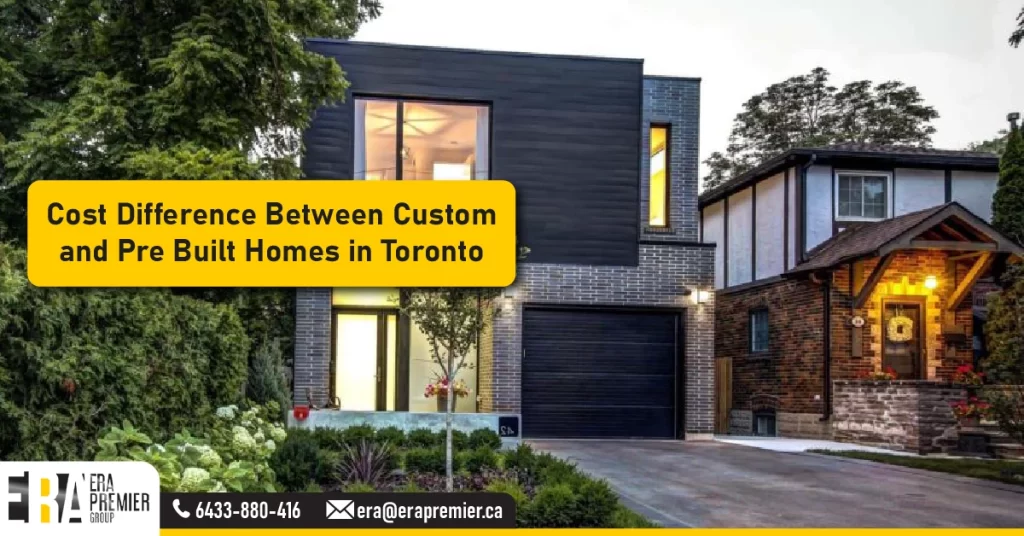
Cost Difference Between Custom and Pre Built Homes in Toronto
When planning a new home in Toronto, one of the most important decisions is whether to build a custom home or purchase a pre-built property. Each option has its advantages and drawbacks, but the differences in cost, timeline, and flexibility are significant.
1. Pre Built Homes
Pre-built homes, also known as turnkey properties, are generally quicker and more affordable. They typically cost around $250–$400 per square foot and can be completed within 6–8 months. However, these homes come with limited flexibility: design layouts, materials, and finishes are mostly predetermined, leaving little room for personalization.
2. Custom Homes
Custom homes offer unparalleled freedom to create a property tailored to your exact vision. Costs usually range from $400–$800+ per square foot, depending on the design, materials, and level of luxury. Building a custom home may take 10–18 months or longer, but it allows you to:
- Design your dream layout from scratch
- Choose high-quality, sustainable materials and energy-efficient systems
- Incorporate specialized features such as smart home technology or luxury finishes
- Ensure every detail aligns with your lifestyle and preferences
While the upfront investment is higher, custom homes deliver a level of personalization and long-term value that pre-built homes rarely match. Many homeowners see the added cost as worthwhile because it ensures the final result truly reflects their vision and meets their quality standards.
Quick Comparison Table
| Type | Average Cost (per sq. ft.) | Timeline | Flexibility |
|---|---|---|---|
| Pre-built home | $250–$400 | 6–8 months | Low |
| Custom home | $400–$800+ | 10–18 months | Very High |
By understanding these differences, homeowners in Toronto can make informed decisions that balance budget, timeline, and personal preferences — ensuring their investment meets both practical needs and long-term satisfaction.
To read more: Luxury Landscaping Ideas for Canadian Homes
How to Budget Smartly for Your Toronto Home Project
Building a home in Toronto is an exciting venture, but it also requires careful financial planning and professional guidance to avoid unexpected expenses. A well-structured budget not only keeps your project on track but also ensures that every dollar is invested wisely. Here are some practical strategies for budgeting effectively:

🟡 Set Aside a Contingency Fund (10–15%)
Unforeseen costs, such as sudden material price increases, weather delays, or minor design changes, can quickly add up. Allocating 10–15% of your total budget as a contingency fund provides a safety net and prevents financial stress during construction.
🟡 Work with a Transparent Builder
Choosing a reputable and transparent builder is crucial. Look for companies that provide itemized quotes and clearly outline costs for materials, labor, and services. Transparency helps you understand where your money is going and ensures there are no hidden fees.
🟡 Request Fixed-Price Contracts
Whenever possible, opt for fixed-price contracts. These agreements guarantee that the cost of your home will not unexpectedly rise due to market fluctuations or labor charges, providing peace of mind throughout the construction process.
🟡 Choose Energy-Efficient Designs
Incorporating energy-efficient systems and sustainable materials can reduce long-term utility bills and improve your home’s overall value. While these upgrades may slightly increase upfront costs, they often pay off over time through savings and enhanced comfort.
🟡 Avoid Mid-Project Design Changes
One of the biggest drivers of cost overruns is changing designs after construction has started. To minimize expenses, finalize layouts, materials, and finishes before breaking ground.
🟡 Partner with Trusted Experts Like ERA Premier Group
Working with an experienced builder such as ERA Premier Group, one of Toronto’s leading luxury home construction companies, ensures efficient project management and budget control. Their approach emphasizes clarity, precision, and cost-effective solutions, helping homeowners maximize value while staying on schedule.
By following these budgeting strategies, homeowners can confidently manage their Toronto home project, avoid surprises, and ensure that their dream house is completed on time and on budget.
The Best Construction Company in Canada
How Long Does It Take to Build a House in Toronto?
The time it takes to build a house in Toronto depends on several factors, including the complexity of the design, permitting processes, availability of materials, and weather conditions. Understanding typical timelines can help homeowners plan their project more effectively and avoid unnecessary delays.
⇒ Standard Homes
For a standard, pre-designed home, construction typically takes around 8–12 months from breaking ground to move-in day. These homes generally follow straightforward layouts and use readily available materials, which helps keep timelines predictable.
⇒ Custom Homes
Custom homes, on the other hand, require more time due to their unique designs, specialized materials, and personalized features. Building a fully custom home in Toronto usually takes 12–18 months or more. The exact duration can vary depending on factors such as multi-level layouts, premium finishes, or complex architectural elements.
⇒ Common Causes of Delays
Even with careful planning, delays can occur. Common reasons include:
- Permit processing: Obtaining approvals from the city can take several weeks or months depending on the complexity of the project.
- Material shortages: Supply chain disruptions or demand for specific high-end finishes may slow progress.
- Design changes: Altering layouts or materials mid-construction can significantly extend the timeline.
⇒ How an Experienced Builder Can Help
Partnering with an experienced and professional builder, such as ERA Premier Group, can minimize delays and streamline the construction process. Their expertise in managing permits, sourcing quality materials, and coordinating skilled labor ensures that your project stays on schedule and runs efficiently from start to finish.
By understanding realistic timelines and potential challenges, homeowners can better plan their move-in dates and manage expectations, ultimately making the construction experience smoother and more predictable.
To read more: the home construction process
Final Thoughts: Turning Your Dream Home into Reality with ERA Premier Group
Building a home in Toronto is more than just a construction project it’s a long-term investment in your lifestyle, comfort, and future. While the process can be complex, the outcome is incredibly rewarding when executed correctly. The key to success lies in choosing a builder who truly understands your vision and manages every stage of construction with expertise, integrity, and precision.
ERA Premier Group has earned its reputation as one of Toronto’s leading luxury home builders and custom construction experts. Known for their attention to detail, innovative designs, and client-focused approach, they consistently deliver homes that exceed expectations. From initial planning and design to final finishes, ERA Premier Group ensures that every element of your home aligns with your unique needs and aspirations.
Whether you envision a sleek, modern minimalist retreat or an expansive, elegant family residence, ERA Premier Group combines high-quality craftsmanship, efficient project management, and transparent budgeting to make your dream home a reality. Their team prioritizes timeliness and cost-effectiveness, ensuring that your home is completed on schedule, on budget, and to the highest standard of quality.
With the right guidance, careful planning, and a trusted partner like ERA Premier Group, building a home in Toronto can be a smooth, enjoyable, and ultimately fulfilling experience — turning your dream of a custom, luxury home into a tangible reality.