
Planning a home renovation in Richmond Hill is an exciting opportunity to improve your living space, increase property value, and enhance comfort. However, before starting any construction work, it’s essential to understand the local permit requirements that apply to your project. Home renovation permits in Richmond Hill are designed to ensure renovations meet safety standards, zoning bylaws, and building codes. Knowing which permits you need and when to apply for them can help you avoid costly delays, fines, and unnecessary complications, setting your renovation project up for a smooth and successful start.
Real Estate & Custom Homes in Canada
When planning a home renovation in Richmond Hill, securing the correct Home Renovation Permits is an essential part of the process. The City of Richmond Hill requires permits for any home renovation work that affects a property’s structure, safety features, or overall layout. Understanding which Home Renovation Permits apply to your project helps ensure your renovation meets local building codes and regulations. Below is an overview of the most common home renovation permits homeowners may need, depending on the size and scope of their renovation project.
1️⃣ Building Permit
A Building Permit is one of the most important approvals required for a home renovation in Richmond Hill, especially for projects that change the structure, layout, or use of a property. Any home renovation that involves building an addition, altering or removing load-bearing walls, finishing or converting a basement, or constructing decks above regulated heights typically requires a Building Permit. Secondary units, such as basement apartments or garden suites, also fall under this category.

The purpose of a Building Permit is to ensure that your home renovation meets the Ontario Building Code, local zoning bylaws, and safety standards related to structural integrity, fire protection, and occupancy. Before construction begins, the City reviews detailed drawings and plans to confirm that the renovation is safe and compliant. Inspections are then conducted at various stages of the home renovation to verify that the work matches the approved plans.
Obtaining the proper Building Permit not only protects homeowners from potential fines and delays but also adds long-term value and peace of mind. A permitted home renovation helps ensure quality workmanship, supports insurance coverage, and avoids complications when selling the property in the future.
To Read: Best Renovation Ideas for Small Spaces
2️⃣ Plumbing Permit
A Plumbing Permit is required for many home renovation projects in Richmond Hill that involve changes to a home’s water supply or drainage systems. If your home renovation includes installing new plumbing fixtures, relocating existing pipes, adding water lines, or modifying drains and vents, a Plumbing Permit is typically necessary. This commonly applies to bathroom renovations, kitchen remodels, basement bathrooms, laundry room upgrades, and any renovation that adds or relocates plumbing connections.

The purpose of a Plumbing Permit is to ensure that all plumbing work during a home renovation is performed safely and in compliance with the Ontario Building Code. Proper permitting helps prevent issues such as water leaks, poor drainage, backflow, and long-term damage caused by improper installation. As part of the permit process, inspections may be required to confirm that plumbing systems are correctly installed and functioning as intended.
Securing the correct Plumbing Permit for your home renovation not only helps avoid fines and construction delays but also protects your property’s value. Permitted plumbing work improves reliability, supports insurance requirements, and provides peace of mind that your renovation meets current safety and quality standards.
3️⃣ Electrical Permit (ESA Permit)
An Electrical Permit is a mandatory requirement for most home renovation projects in Richmond Hill that involve electrical work. Unlike other permits, electrical approvals are issued by the Electrical Safety Authority (ESA), not the City of Richmond Hill. Any home renovation that includes installing new wiring, upgrading an electrical panel, adding or relocating outlets, or modifying lighting systems requires an Electrical Permit to ensure the work meets provincial safety standards.

The purpose of an Electrical Permit is to protect homeowners from electrical hazards such as fire risks, overloaded circuits, and improper wiring. During a home renovation, ESA inspections are conducted to verify that all electrical installations are performed correctly and comply with the Ontario Electrical Safety Code. These inspections play a critical role in maintaining both safety and functionality within the home.
In most cases, a licensed electrician will apply for the Electrical Permit on behalf of the homeowner and coordinate inspections throughout the home renovation process. Ensuring that your renovation includes the proper Electrical Permit helps prevent costly corrections, supports insurance coverage, and provides long-term peace of mind that your electrical systems are safe and up to code.
To Read: Regulations for Home Construction
4️⃣ HVAC Permit
An HVAC Permit may be required for certain home renovation projects in Richmond Hill that involve installing, replacing, or modifying heating, ventilation, or air conditioning systems. If your home renovation includes furnace replacements, new air conditioning units, changes to ductwork, or ventilation upgrades, an HVAC Permit helps ensure the work meets local building regulations and safety standards.
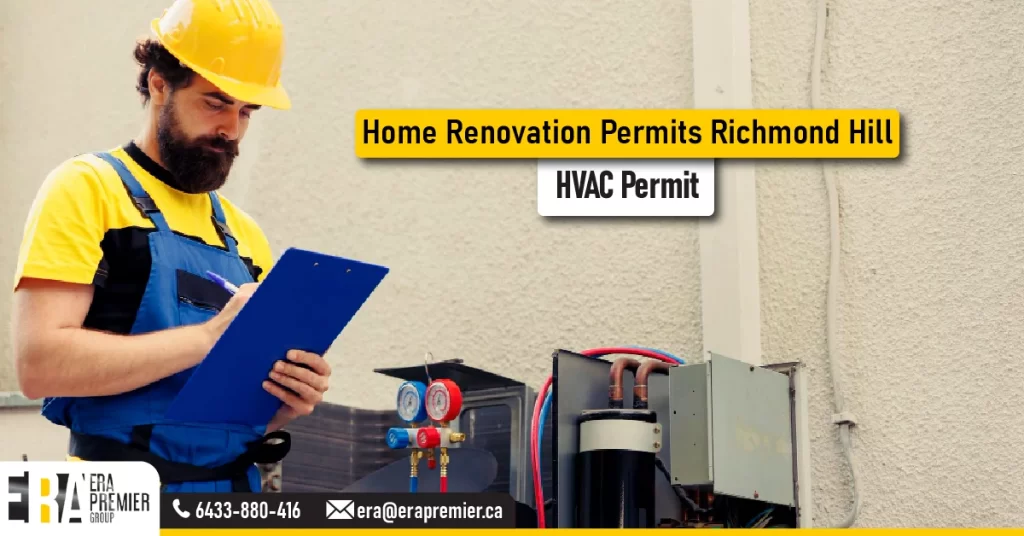
The main purpose of an HVAC Permit is to confirm that mechanical systems installed during a home renovation are safe, energy-efficient, and properly sized for the home. Permitted HVAC work helps prevent issues such as poor airflow, carbon monoxide risks, excessive energy consumption, and improper ventilation. Inspections may be required to verify that installations comply with the Ontario Building Code and applicable mechanical standards.
Obtaining the correct HVAC Permit for your home renovation also supports long-term performance and indoor comfort. Properly permitted HVAC upgrades can improve air quality, enhance system efficiency, and protect homeowners from future repair costs, insurance issues, or compliance problems when selling the property.
5️⃣ Zoning and Site Plan Approval (If Applicable)
Certain home renovation projects in Richmond Hill may require zoning review or site plan approval, depending on the scope and location of the work. These approvals are commonly needed for home renovation projects such as building additions, garage conversions, extensions, or any renovation that changes property setbacks, lot coverage, building height, or the overall footprint of the home.
The purpose of zoning and site plan approval is to ensure that a home renovation complies with local zoning bylaws and community planning standards. These regulations help maintain neighborhood character, manage land use, and ensure proper spacing between buildings. During the review process, the City evaluates how the proposed home renovation fits within the surrounding area and whether it meets requirements related to access, drainage, parking, and landscaping.
Securing zoning or site plan approval before starting a home renovation can help prevent legal issues, project delays, or costly redesigns. When approvals are in place, homeowners can move forward with confidence knowing their renovation aligns with municipal guidelines and long-term planning objectives for Richmond Hill.
To Read: Best Renovation Ideas for Small Spaces
6️⃣ Demolition Permit
A Demolition Permit may be required for certain home renovation projects in Richmond Hill that involve removing a structure or demolishing a significant portion of an existing home. This applies to home renovation work such as tearing down garages, removing large sections of a house, or demolishing interior structural components as part of a major renovation or rebuild.
The purpose of a Demolition Permit is to ensure that demolition work during a home renovation is carried out safely and in compliance with municipal and environmental regulations. These permits help protect neighboring properties, public safety, and utility services while also ensuring proper waste disposal and environmental responsibility. Inspections or additional approvals may be required before and during the demolition process.
Obtaining the appropriate Demolition Permit before starting a home renovation helps homeowners avoid fines, stop-work orders, and project delays. Properly permitted demolition work also creates a safer foundation for the next phase of the renovation, allowing construction to proceed smoothly and in accordance with Richmond Hill’s building requirements.
Real Estate & Custom Homes in Canada
Conclusion
Planning a home renovation in Richmond Hill requires careful attention to renovation permits to ensure every aspect of the project is safe, legal, and compliant with local regulations. From building permits and plumbing permits to electrical, HVAC, and even demolition permits, understanding the requirements for each type of home renovation work is essential for a smooth renovation process. Additionally, some projects may need zoning and site plan approvals to align with neighborhood regulations.
Securing the correct renovation permits not only protects homeowners from fines and delays but also guarantees that the home renovation meets Ontario Building Code standards and municipal safety guidelines. By planning ahead and obtaining all necessary renovation permits, homeowners can complete their home renovation projects with confidence, quality, and peace of mind. Properly permitted renovations enhance property value, ensure long-term safety, and provide a foundation for a successful and stress-free remodeling experience.
FAQ
1. Do I need a permit for a small home renovation in Richmond Hill?
Yes, even minor renovations that affect plumbing, electrical, or structural elements may require a renovation permit. Always check with the city before starting.
2. Who can apply for an Electrical Permit in Richmond Hill?
Electrical work requires a permit from the Electrical Safety Authority (ESA), usually handled by a licensed electrician.
3. Are HVAC upgrades included in home renovation permits?
Yes, installing or altering heating, ventilation, or air conditioning systems typically requires an HVAC permit.
4. What happens if I start a home renovation without the required permits?
Starting without the proper renovation permits can lead to fines, stop-work orders, and costly retroactive corrections.
5. Do all home additions need zoning approval in Richmond Hill?
Many home additions, garage conversions, or projects affecting property setbacks require zoning and site plan approval to comply with local regulations.